
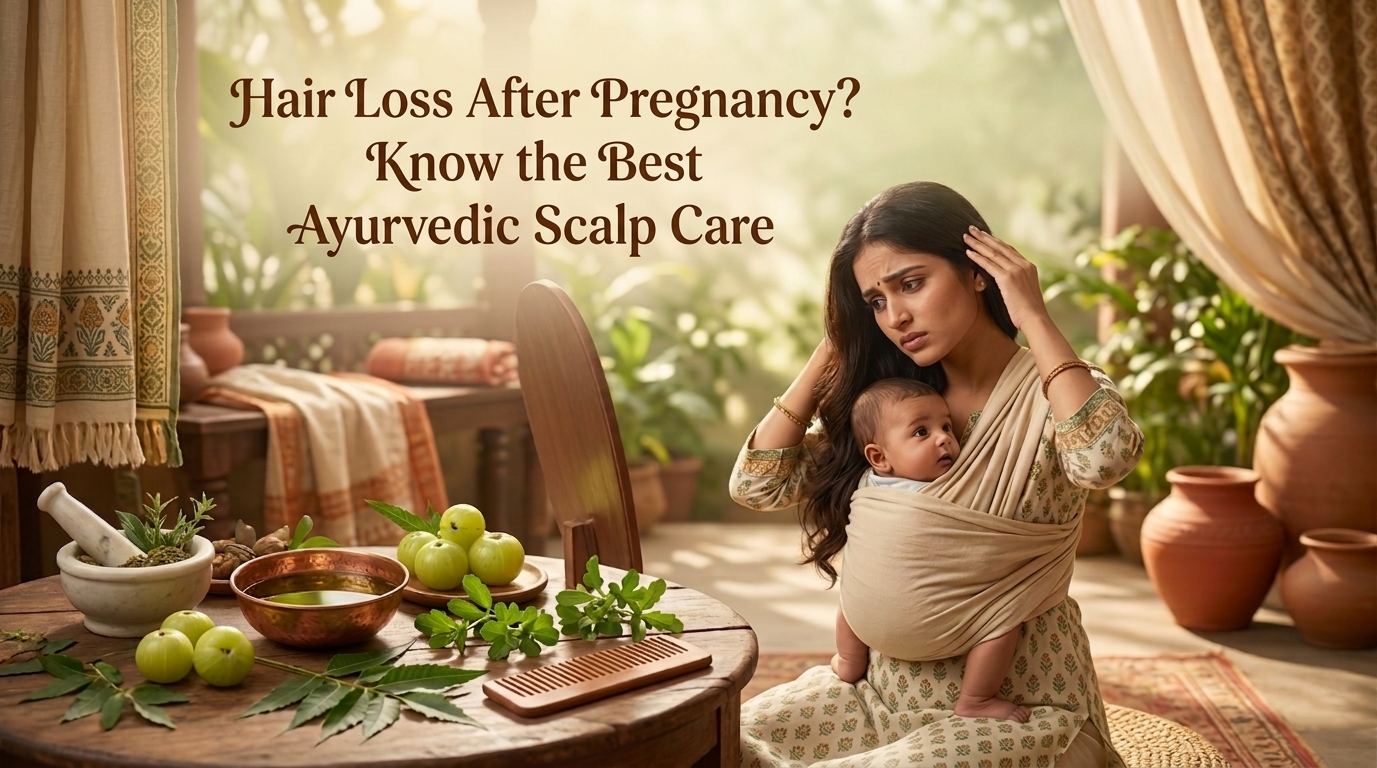
After dealing with clogged drains, thinning hair, and solutions that did little to solve the issue, one mom of three in her mid-thirties sought to solve the hair loss challenge that comes after pregnancy. She had taken all the conventional steps, such as pharmacy vitamins, biotin, strengthening shampoos, and even online vitamins and gummies for hair loss. While they were helpful in theory, they did nothing to solve the challenge.
Her session with an Ayurvedic practitioner helped her understand that the real challenge wasn’t the hair, but the state of her body. She had spent years focusing on pregnancy and then breastfeeding, had no sleep, and had been putting everyone else’s needs before her own. She had depleted her Ojas, or the life force that drives one’s vitality. She had a Vata imbalance and a digestive system that had been through an event.
Soon enough, she noticed less shedding, new hair growth around the hairline, and perhaps most importantly, she felt energetic, calm, and confident again.
A Season of Depletion
Hair loss for a new mom usually begins three months post-delivery, which is also called postpartum or postnatal hair loss. This hair loss is a normal response to pregnancy and delivery hormones. However, for a new mom, this hair loss adds to her exhaustion as she tries to care for a new baby.
In this case, the new mom had children aged seven years or younger. She had just given birth and started experiencing hair loss while she was still breastfeeding. She felt like she was living in a blur, with little sleep and no time to worry about her own health and well-being. She had experienced hair loss before when she had her other children, but this time she felt different. She felt tired, had cold hands and feet, had an irregular digestive system, and felt emotionally sensitive.
In Ayurveda, this kind of thing happens all the time: a woman whose body had overflowed with strength in pregnancy and birth, but whose recovery was put on the back burner for the sake of everyone else’s comfort.
When the Mirror Turns Against Her
It was an ordinary Tuesday morning. She was standing in front of the bathroom sink, brushing her hair, when another clump fell out. It wasn’t the first time, but it was the first time that she cried about it. Her temples looked thinner, and the thick ponytail that used to sit there was now sparse. She had started wearing her hair in a ponytail every day just to avoid looking in the mirror.
It was hard for her, though, partly because of the guilt that accompanied it. There’s a feeling that, as a mother of healthy kids, she shouldn’t really worry about something as superficial as hair loss. But the truth is, the period after childbirth brought a number of hormonal, physical, and psychological changes. When her body was already adjusting to so many changes, hair loss made it even more unsettling. By the time she booked a consultation, she wasn’t seeking another product. She was seeking an explanation, an explanation for why she still felt so drained months after giving birth.
Understanding the Ayurvedic View
In Ayurvedic medicine, hair represents a by-product of the Asthi Dhatu, or the bone tissue present within the body. Healthy hair represents healthy tissues within the body.
The process of pregnancy and giving birth places a tremendous amount of stress on the tissues within the body. During this time, a woman uses up a tremendous amount of Ojas, or the essence present within the body that represents vitality, immune function, and emotional stability.
Traditionally, the recovery process after delivery involves a tremendous amount of rest, warm foods, oil massage, and a quiet environment.
However, this isn’t possible within today’s fast-paced world.
The client’s patterns that became apparent within this consult included:
- Digestive patterns had been off since giving birth
- She had been skipping meals or rushing to eat
- She had difficulty sleeping
- Her mind was constantly racing at night
- Her circulatory patterns had been off, with cold hands and feet
According to Ayurvedic medicine, these patterns indicated an imbalance within the Vata dosha, or the energy responsible for
From an Ayurvedic perspective, this is really a message that there is an imbalance in movement energy (Vata), dryness, and the nervous system. If you allow this imbalance in Vata to continue for too long a time, you might see hair loss, brittle nails, nervous tension, dryness, and fatigue. Hair loss is not the problem; it is a symptom of underlying causes.
The Protocol: The Root
This protocol is geared towards a busy mom’s lifestyle, not a person with a complex and intricate wellness routine already in place. There are only three main components to this protocol.
Internal Support
The advice given is about traditional Ayurvedic herbs that are used to support healing after childbirth and to rebuild Ojas. The reason for choosing these particular herbs, Ashwagandha and Shatavari, is that they are believed to help with balancing hormones, soothing the nervous system, and rejuvenating tissues that are depleted.
Digestive Support Through Diet
Instead of cutting meals, there is an emphasis on nutrition. Having meals throughout the day will help to keep the digestive fire, Agni, in balance. This is important because Agni is how nutrients get to the tissues in the body, even to the hair follicles.
Therapeutic Scalp Oil Massage
This includes a weekly warm oil scalp massage, or Shiro Abhyanga. This is an ancient remedy to balance Vata in the scalp. This type of massage is also believed to calm the nervous system, a much-needed respite from all the stimulation in her life.
Simple Lifestyle Changes
It would be explained to her how this would benefit her entire family. She would be encouraged to add a warm, cooked meal to her day. She would also be encouraged to add a grounding practice before bed.
Simple Habit Shifts
The plan was simple:
- Eat one healthy meal a day
- Establish a calming routine before bed
- Treat self-care as a loving act for the people you care about
The Change Unfolds
Ayurveda isn’t a magic fix, and that became apparent quickly. “Healing through food takes weeks or months to rebuild tissues,” it warned.
What surprised her first, wasn’t the hair growth. After a month of Ayurveda, digestion improved, nights became quieter, and days became glossier. She knew this meant her Vata was calming, and nutrition was working from the inside out to heal her.
Two to three months into the routine, hair shedding lessened. Drains no longer swallowed everything in sight. New hair emerged on the temples and hairline. Hair became less brittle. More importantly, she felt healed inside. Emotions became steady. Energy returned to normal.
The best part was that it fit seamlessly into life. Ten minutes a week to oil the scalp. No special foods to buy. A simple three-minute pre-sleep routine. Simple.
What began as a hair restoration remedy became a way to learn about her body’s response to stress and exhaustion. Her hair became stronger, and so did she.
Lessons for Hair Regrowth After Pregnancy
- The Root Cause: Hair loss after pregnancy isn’t just a hair problem, it’s an internal issue. The body’s gone through a period of major adjustments with childbirth.
- Digestion First: A healthy digestive fire is the key to a healthy gut. This is according to Ayurvedic principles.
- Scalp Oil: Calming the nervous system through scalp oiling.
- Building Up: Healing from childbirth happens slowly. Healing happens with small increments of self-care.
- Personalization: Each woman’s constitution is unique.